
Читаем Caliban полностью
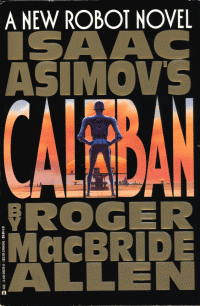
Isaac Asimov, Roger MacBride Allen
Caliban
To five wondrous creatures, named in the order of their appearance on this planet:
Aaron
Victoria
Benton
Jonathan
And
Meredith
Acknowledgments
This book would not have been possible without the support, and especially the patience, of David Harris, John Betancourt, Byron Preiss, Susan Allison, Ginjer Buchanan, and Peter Heck. There was many a slip between cup and the lip, but thanks to their collective efforts, never a drop of the good stuff was lost. The book stands as proof once again that every writer needs at least one editor, and sometimes five or six is no bad idea. Thanks are also due to Thomas B. Allen and Eleanore Fox, neither of whom had time to read the manuscript, and both of whom did.
I. A Robot May Not Injure a Human Being, or, Through Inaction, Allow a Human Being to Come to Harm.
II. A Robot Must Obey the Orders Given It by Human Beings Except where Such Orders Would Conflict with the First Law.
III. A Robot Must Protect Its Own Existence As Long As Such Protection Does Not Conflict with the First or Second Law.
…THE Spacer-Settler struggle was at its beginning, and at its end, an ideological contest. Indeed, to take a page from primitive studies, it might more accurately be termed a theological battle, for both sides clung to their positions more out of faith, fear, and tradition than through any carefully reasoned marshaling of the facts.
Always, whether acknowledged or not, there was one issue at the center of every confrontation between the two sides: robots. One side regarded them as the ultimate good, while the other saw them as the ultimate evil.
Spacers were the descendants of men and women who had fled semi-mythical Earth with their robots when robots were banned there. Exiled from Earth, they traveled in crude starships on the first wave of colonization from Earth. With the aid of their robots, the Spacers terraformed fifty worlds and created a culture of great beauty and refinement, where all unpleasant tasks were left to the robots. Ultimately, virtually
The Settlers were the descendants of those who stayed behind on Earth. Their ancestors lived in great underground Cities, built to be safe from atomic attack. It is beyond doubt that this way of life induced a certain xenophobia into Settler culture. That xenophobia long survived the threat of atomic war, and came to be directed against the smug Spacers-and their robots.
It was fear that had caused Earth to cast out robots in the first place. Part of it was an irrational fear of metal monsters wandering the landscape. However, the people of Earth had more reasonable fears as well. They worried that robots would take jobs-and the means of making a living-from humans. Most seriously, they looked to what they saw as the indolence, the lethargy and decadence of Spacer society. The Settlers feared that robots would relieve humanity of its spirit, its will, its ambition, even as they relieved humanity of its burdens.
The Spacers, meanwhile, had grown disdainful of the people they perceived to be grubby underground dwellers. Spacers came to deny their own common ancestry with the people who had cast them out. But so, too, did they lose their own ambition. Their technology, their culture, their worldview, all became static, if not stagnant, The Spacer ideal seemed to be a universe where nothing ever happened, where yesterday and tomorrow were like today, and the robots took care of all the unpleasant details.
Похожие книги



- Мистика
- Историческое фэнтези
- Ироническая фантастика
- Альтернативная история
- Технофэнтези
- Постапокалипсис
- Киберпанк
- Детективная фантастика
- Стимпанк
- Героическая фантастика
- Научная Фантастика
- Эпическая фантастика
- Ненаучная фантастика
- Сказочная фантастика
- Космоопера
- Юмористическое фэнтези
- Ироническое фэнтези
- Ужасы и мистика
- Юмористическая фантастика
- Социально-философская фантастика
- Космическая фантастика
- Городское фэнтези
- Боевая фантастика
- ЛитРПГ
- Фантастика
- Современная сказка
- Социально-психологическая фантастика
- Хроноопера
- Ужасы
- Мифологическое фэнтези
- Фэнтези
- Фантастика: прочее
- РеалРПГ
- Славянское фэнтези
- Бояръ-Аниме
- Попаданцы
- Шпионский детектив
- Прочие Детективы
- Маньяки
- Полицейские детективы
- Исторический детектив
- Шпионские детективы
- Классические детективы
- Триллеры
- Криминальные детективы
- Иронические детективы
- Криминальный детектив
- Крутой детектив
- Детективы
- Триллер
- Иронический детектив, дамский детективный роман
- Советский детектив
- Классический детектив
- Политический детектив
- Боевик
- Про маньяков
- Медицинский триллер
- Дамский детективный роман
- Техно триллер
- Юридический триллер
- Боевики
- Исторические детективы
- Политические детективы
- Поэзия
- в стихах
- Эпическая поэзия
- Басни
- Песенная поэзия
- Лирика
- Визуальная и экспериментальная поэзия, верлибры, палиндромы
- Поэма, эпическая поэзия
- Классическая зарубежная поэзия
- Классическая русская поэзия
- Поэзия Востока
- Современная поэзия
- Классическая поэзия
- Современная зарубежная поэзия
- Современная русская поэзия
- Юмористические стихи, басни
- Верлибры
- Палиндромы
- Экспериментальная поэзия
- Визуальная поэзия
- Историческая фантастика
- Историческая литература
- Политика
- Геология и география
- Ветеринария
- Экология
- Государство и право
- Астрономия и Космос
- Математика
- Шпаргалки
- Биохимия
- Обществознание
- Педагогика
- Психология
- Учебники
- Иностранные языки
- Детская психология
- Биофизика
- Прочая научная литература
- Языкознание
- Биология
- Психотерапия и консультирование
- Юриспруденция
- Военная история
- Альтернативная медицина
- Философия
- Медицина
- Зоология
- Физика
- Литературоведение
- Зарубежная образовательная литература, зарубежная прикладная, научно-популярная литература
- Языкознание, иностранные языки
- Биология, биофизика, биохимия
- Обществознание, социология
- Психология и психотерапия
- Востоковедение
- Химия
- История
- Ботаника
- Экономика
- Альтернативные науки и научные теории
- Научная литература
- Рефераты
- Секс и семейная психология
- Книги о войне
- Популярно об истории
- Книги о путешествиях
- Книги по психологии
- Религия и духовная литература
- Детская познавательная и развивающая литература
- Детская образовательная литература
- Книги для дошкольников
- Прочая детская литература
- Детские приключения
- Детская проза
- Детские стихи
- Детские остросюжетные
- Детская фантастика
- Книга-игра
- Буквари
- Фантастика для детей
- Детская литература
- Проза для детей
- Внеклассное чтение
- Игры, упражнения для детей
- Классическая детская литература
- Стихи для детей
- Русские сказки
- Зарубежная литература для детей
- Сказки народов мира
- Зарубежные детские книги
- Сказки
- Детские детективы
- Школьные учебники
- Учебная литература
- Книги для подростков
- Экономика
- Поиск работы, карьера
- Отраслевые издания
- Недвижимость
- Корпоративная культура
- Делопроизводство
- Внешнеэкономическая деятельность
- Бухучет и аудит
- Торговля
- Малый бизнес
- Личные финансы
- Государственное и муниципальное управление
- Краткое содержание
- Ораторское искусство / риторика
- Работа с клиентами
- Стартапы и создание бизнеса
- Маркетинг, PR, реклама
- Карьера, кадры
- Маркетинг, PR
- Финансы
- Личная эффективность
- О бизнесе популярно
- Интернет-бизнес
- Банковское дело
- Менеджмент
- Менеджмент и кадры
- Тайм-менеджмент
- Ценные бумаги, инвестиции
- Кадровый менеджмент
- Политическое управление
- Управление, подбор персонала
- Зарубежная деловая литература
- Деловая литература
- Педагогика, воспитание детей, литература для родителей
- Медицина и здоровье
- Семейные отношения, секс
- Семейные отношения
- Рыбалка
- Отдых / туризм
- Автомобили и ПДД
- Сделай сам
- Прочее домоводство
- Спорт
- Здоровье и красота
- Охота
- Домашние животные
- Коллекционирование
- Хобби и ремесла
- Кулинария
- Развлечения
- Сад и огород
- Боевые искусства, спорт
- Домоводство
- Здоровье
- Эротика и секс
- Домашнее хозяйство
- Интерьеры
- Хобби / увлечения
- Мода и стиль
- Красота
- Секс / секс-руководства
- Йога
- Изобразительное искусство
- Рукоделие и ремесла
- Спорт / фитнес
- Прикладная литература
- Компьютерное «железо»
- Базы данных
- ОС и Сети
- Интернет
- Программное обеспечение
- Программирование
- Прочая компьютерная литература
- Учебные пособия, самоучители
- ОС и Сети, интернет
- Программирование, программы, базы данных
- Компьютерное 'железо' (аппаратное обеспечение), цифровая обработка сигналов
- Зарубежная компьютерная, околокомпьютерная литература
- Цифровая обработка сигналов
- Средневековая классическая проза
- Современная проза
- Классическая проза
- Готический роман
- Антисоветская литература
- Военная проза
- Проза прочее
- Роман
- Повесть
- Новелла
- Сентиментальная проза
- Рассказ
- Историческая проза
- Контркультура
- Эпистолярная проза
- Русская классическая проза
- Советская классическая проза
- Магический реализм
- Проза
- Зарубежная классическая проза
- Классическая проза ХX века
- Классическая проза ХIX века
- Роман, повесть
- Фантасмагория, абсурдистская проза
- Афоризмы, цитаты
- Экспериментальная, неформатная проза
- Проза о войне
- Современная русская и зарубежная проза
- Классическая проза XVII-XVIII веков
- Афоризмы
- Эпопея
- Феерия
- Семейный роман/Семейная сага
- Эссе, очерк, этюд, набросок
- Малые литературные формы прозы: рассказы, эссе, новеллы, феерия
- Зарубежные приключения
- Современная зарубежная литература
- Зарубежная драматургия
- Зарубежная фантастика
- Зарубежный юмор
- Зарубежная религиозная литература
- Зарубежная образовательная литература
- Зарубежная публицистика
- Зарубежная психология
- Зарубежные любовные романы
- Зарубежная поэзия
- Зарубежная классика
- Зарубежная старинная литература
- Зарубежная компьютерная литература
- Зарубежная литература о культуре и искусстве
- Зарубежные детективы
- Зарубежная прикладная литература
- Зарубежное фэнтези
- Зарубежная справочная литература