
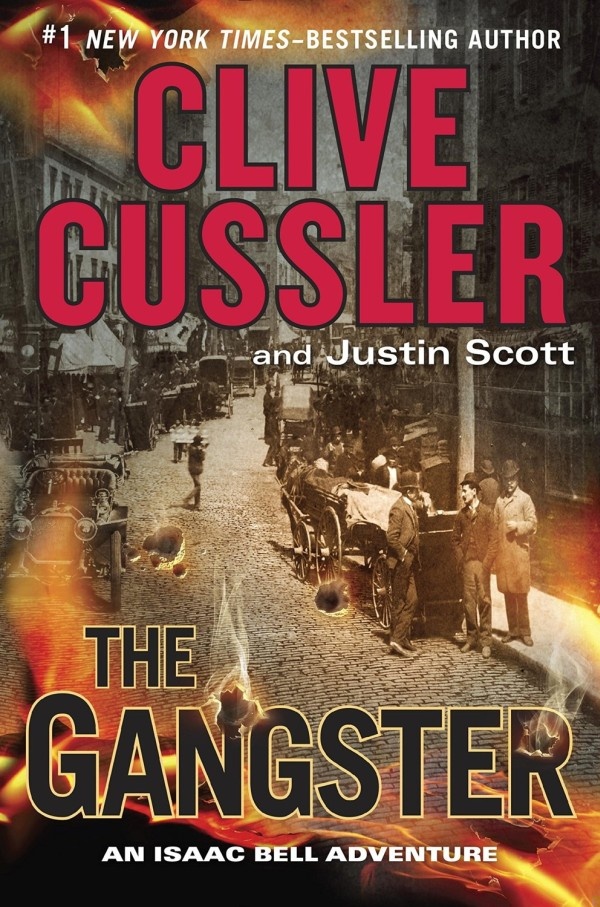
Читаем The Cutthroat полностью
Cox tossed back his whiskey and juggled the glass in his hand as if weighing the wisdom of a refill. “I’ve been asking myself the same question. So far, all shouting’s gotten me is arrested and thrown in the bughouse.”
“Then what were you doing hanging around the theater tonight?”
“Just calming down… trying to figure things out… planning on how to get the credit I deserve.” Cox glanced outside the windows where crowds of people were suddenly sweeping along the sidewalk toward the train station. Curtains had descended and theatergoers were hurrying home to the suburbs. Something caught Cox’s eye and riveted his attention.
“I have to go. Meet me here tomorrow for lunch. Thanks for the drink.”
“You paid,” said Dashwood. “Thank
“Lunch! Tomorrow.”
Cox pushed through the swinging doors. Dashwood lost sight of him in the crowd.
* * *
“Sleep tight,” said Isaac Bell’s conductor, which struck Bell as an unusually personal remark coming from the taciturn old geezer.
“Good night, Kux.”
He showered in the marble bathroom, poured two fingers of Bushmills, and carried the whiskey into the owner’s stateroom at the back of the car. The lights were low, the bed had been turned down, and his heart soared.
“Don’t be frightened. It’s only me.”
“Marion!” Bell scooped her into his arms. “Where did you come from?”
“New York.”
“This is wonderful. Why didn’t you tell me you were coming?”
“I had a business meeting. If it didn’t go well, I might have wanted to slink off by myself.”
“I’m glad it went well.”
“It went
Bell let go of her. “Which movie?”
“What I told you:
“No,” said Bell.
“No? Why not?”
“It’s too dangerous. Fifty-fifty odds one of The Boys is the Cutthroat. If not, he could be their stage manager. I don’t want you anywhere near the
“Isaac, if I can make this movie, I can tell Preston Whiteway and Picture World to go jump in a lake.”
“I thought you told him that when you made
“I didn’t burn that bridge, and I’m glad I didn’t. I’ve had no luck putting a four-reeler together on my own.
“I won’t let go of this opportunity. I’m sure nothing will happen to me.”
“I’m sorry. That’s not good enough.”
“But I know, I just can’t put it in words.”
Bell said, “Why don’t we sleep on it? Talk it over in the morning.”
“I’m not tired.”
“You’re not? Neither am I.”
* * *
Reckless? the Cutthroat asked again.
The theater train, a limited-stops express that ran on the suburban commuter line, pulled out of Union Station at ten minutes to midnight. Forty minutes to Tuxedo Park. Forty minutes to decide.
Reckless?
Maybe I was in my younger years.
Undisciplined?
Do you take me for a fool? Discipline is second nature now, my sturdy watchman, ever-vigilant, acutely observant.
He had sharpened the instincts he had been born with. He had grown so sharp at gauging menace, so skilled at covering his tracks, that the odds of getting captured had long ago shifted in his favor.
Reckless? It would be impossible to be reckless. And he had the advantage tonight of operating on familiar territory, for to his eye the Midwestern cities were all similar, with the theaters short train rides from the wealthy suburbs. Cincinnati was the first place he settled after sailing from England on an ancient “half clipper” cotton ship. It was returning empty to New Orleans. The other passengers joked that they were carried as ballast, but her captain was pocketing the ticket money and could care less about his name or whether he owned a passport or landed in New Orleans disguised as a sailor.
A showboat — a theater on a Mississippi River barge — brought him to Cincinnati, where he met a woman with money. After she died, the yellow cottage on the river had been his to visit intermittently for nearly twenty years.
He knew the territory. The theater train carried a gay crowd of mostly younger people who could afford to sleep late the next morning. That they all knew each other — Tuxedo Park being a town of prosperous businesses that benefitted from proximity to its powerhouse neighbor on the Mississippi River — made it even riskier as he would have to pry her loose from the clods vying for her attention.
I know the risk.
He took a seat at the back of the car a couple of rows behind her and imagined the opening sequences of the drama. It started with a curtain-raiser on a quiet suburban pavement that was darkened by the spring-budding trees filtering the streetlamps. She would say something like, “You look familiar.”
And they would start to walk down tree-lined streets that grow increasingly dim and narrow.
“Would you tell me your name, miss?”
They were turning into a lane when the curtain crashed down.
The imagined encounter evaporated. A man, who had entered the car from the vestibule behind him, leaned close and whispered,
Все книги серии Isaac Bell

Похожие книги



- Мистика
- Историческое фэнтези
- Ироническая фантастика
- Альтернативная история
- Технофэнтези
- Постапокалипсис
- Киберпанк
- Детективная фантастика
- Стимпанк
- Героическая фантастика
- Научная Фантастика
- Эпическая фантастика
- Ненаучная фантастика
- Сказочная фантастика
- Космоопера
- Юмористическое фэнтези
- Ироническое фэнтези
- Ужасы и мистика
- Юмористическая фантастика
- Социально-философская фантастика
- Космическая фантастика
- Городское фэнтези
- Боевая фантастика
- ЛитРПГ
- Фантастика
- Современная сказка
- Социально-психологическая фантастика
- Хроноопера
- Ужасы
- Мифологическое фэнтези
- Фэнтези
- Фантастика: прочее
- РеалРПГ
- Славянское фэнтези
- Бояръ-Аниме
- Попаданцы
- Шпионский детектив
- Прочие Детективы
- Маньяки
- Полицейские детективы
- Исторический детектив
- Шпионские детективы
- Классические детективы
- Триллеры
- Криминальные детективы
- Иронические детективы
- Криминальный детектив
- Крутой детектив
- Детективы
- Триллер
- Иронический детектив, дамский детективный роман
- Советский детектив
- Классический детектив
- Политический детектив
- Боевик
- Про маньяков
- Медицинский триллер
- Дамский детективный роман
- Техно триллер
- Юридический триллер
- Боевики
- Исторические детективы
- Политические детективы
- Поэзия
- в стихах
- Эпическая поэзия
- Басни
- Песенная поэзия
- Лирика
- Визуальная и экспериментальная поэзия, верлибры, палиндромы
- Поэма, эпическая поэзия
- Классическая зарубежная поэзия
- Классическая русская поэзия
- Поэзия Востока
- Современная поэзия
- Классическая поэзия
- Современная зарубежная поэзия
- Современная русская поэзия
- Юмористические стихи, басни
- Верлибры
- Палиндромы
- Экспериментальная поэзия
- Визуальная поэзия
- Историческая фантастика
- Историческая литература
- Политика
- Геология и география
- Ветеринария
- Экология
- Государство и право
- Астрономия и Космос
- Математика
- Шпаргалки
- Биохимия
- Обществознание
- Педагогика
- Психология
- Учебники
- Иностранные языки
- Детская психология
- Биофизика
- Прочая научная литература
- Языкознание
- Биология
- Психотерапия и консультирование
- Юриспруденция
- Военная история
- Альтернативная медицина
- Философия
- Медицина
- Зоология
- Физика
- Литературоведение
- Зарубежная образовательная литература, зарубежная прикладная, научно-популярная литература
- Языкознание, иностранные языки
- Биология, биофизика, биохимия
- Обществознание, социология
- Психология и психотерапия
- Востоковедение
- Химия
- История
- Ботаника
- Экономика
- Альтернативные науки и научные теории
- Научная литература
- Рефераты
- Секс и семейная психология
- Книги о войне
- Популярно об истории
- Книги о путешествиях
- Книги по психологии
- Религия и духовная литература
- Детская познавательная и развивающая литература
- Детская образовательная литература
- Книги для дошкольников
- Прочая детская литература
- Детские приключения
- Детская проза
- Детские стихи
- Детские остросюжетные
- Детская фантастика
- Книга-игра
- Буквари
- Фантастика для детей
- Детская литература
- Проза для детей
- Внеклассное чтение
- Игры, упражнения для детей
- Классическая детская литература
- Стихи для детей
- Русские сказки
- Зарубежная литература для детей
- Сказки народов мира
- Зарубежные детские книги
- Сказки
- Детские детективы
- Школьные учебники
- Учебная литература
- Книги для подростков
- Экономика
- Поиск работы, карьера
- Отраслевые издания
- Недвижимость
- Корпоративная культура
- Делопроизводство
- Внешнеэкономическая деятельность
- Бухучет и аудит
- Торговля
- Малый бизнес
- Личные финансы
- Государственное и муниципальное управление
- Краткое содержание
- Ораторское искусство / риторика
- Работа с клиентами
- Стартапы и создание бизнеса
- Маркетинг, PR, реклама
- Карьера, кадры
- Маркетинг, PR
- Финансы
- Личная эффективность
- О бизнесе популярно
- Интернет-бизнес
- Банковское дело
- Менеджмент
- Менеджмент и кадры
- Тайм-менеджмент
- Ценные бумаги, инвестиции
- Кадровый менеджмент
- Политическое управление
- Управление, подбор персонала
- Зарубежная деловая литература
- Деловая литература
- Педагогика, воспитание детей, литература для родителей
- Медицина и здоровье
- Семейные отношения, секс
- Семейные отношения
- Рыбалка
- Отдых / туризм
- Автомобили и ПДД
- Сделай сам
- Прочее домоводство
- Спорт
- Здоровье и красота
- Охота
- Домашние животные
- Коллекционирование
- Хобби и ремесла
- Кулинария
- Развлечения
- Сад и огород
- Боевые искусства, спорт
- Домоводство
- Здоровье
- Эротика и секс
- Домашнее хозяйство
- Интерьеры
- Хобби / увлечения
- Мода и стиль
- Красота
- Секс / секс-руководства
- Йога
- Изобразительное искусство
- Рукоделие и ремесла
- Спорт / фитнес
- Прикладная литература
- Компьютерное «железо»
- Базы данных
- ОС и Сети
- Интернет
- Программное обеспечение
- Программирование
- Прочая компьютерная литература
- Учебные пособия, самоучители
- ОС и Сети, интернет
- Программирование, программы, базы данных
- Компьютерное 'железо' (аппаратное обеспечение), цифровая обработка сигналов
- Зарубежная компьютерная, околокомпьютерная литература
- Цифровая обработка сигналов
- Средневековая классическая проза
- Современная проза
- Классическая проза
- Готический роман
- Антисоветская литература
- Военная проза
- Проза прочее
- Роман
- Повесть
- Новелла
- Сентиментальная проза
- Рассказ
- Историческая проза
- Контркультура
- Эпистолярная проза
- Русская классическая проза
- Советская классическая проза
- Магический реализм
- Проза
- Зарубежная классическая проза
- Классическая проза ХX века
- Классическая проза ХIX века
- Роман, повесть
- Фантасмагория, абсурдистская проза
- Афоризмы, цитаты
- Экспериментальная, неформатная проза
- Проза о войне
- Современная русская и зарубежная проза
- Классическая проза XVII-XVIII веков
- Афоризмы
- Эпопея
- Феерия
- Семейный роман/Семейная сага
- Эссе, очерк, этюд, набросок
- Малые литературные формы прозы: рассказы, эссе, новеллы, феерия
- Зарубежные приключения
- Современная зарубежная литература
- Зарубежная драматургия
- Зарубежная фантастика
- Зарубежный юмор
- Зарубежная религиозная литература
- Зарубежная образовательная литература
- Зарубежная публицистика
- Зарубежная психология
- Зарубежные любовные романы
- Зарубежная поэзия
- Зарубежная классика
- Зарубежная старинная литература
- Зарубежная компьютерная литература
- Зарубежная литература о культуре и искусстве
- Зарубежные детективы
- Зарубежная прикладная литература
- Зарубежное фэнтези
- Зарубежная справочная литература